
Concussion
Concussion rates in elite rugby and other impact sports have hit the highest levels since records began. Players are stronger than ever before and interestingly, concussion is the most reported injury in the women’s game.
The audit of the 2020-21 season, published by the RFU in conjunction with Premiership Rugby and the Rugby Players’ Association, showed that for the 10th season running concussion was the most reported injury, accounting for 28% of injuries. “It should be noted that the 2020-21 season saw an increase in the incidence of match concussion despite observing a decrease in the incidence of all injuries,” the report states.
In total there were 131 concussions sustained in matches – resulting in an average of 17 days on the sidelines – and 17 sustained in training.
The alarming findings came on the same day that World Rugby confirmed its decision to extend the minimum stand-down period for most concussed elite-level players to 12 days from 1 July.
The men’s audit also showed that 48% of all match injuries were linked to the tackle – 27% for being tackled, 21% for tackling.
Fact
10 to 15% of high school rugby players will suffer a concussion in any season; up to 50% of high school rugby players would have suffered a concussion in their high school playing careers. These numbers increase at University and National level.
Facts For Thought
- Between 1.7 and 3 million sports- and recreation-related concussions happen each year.
- Around 300,000 of those are from football.
- 5 in 10 concussions go unreported or undetected.
- 2 in 10 high school athletes who play contact sports — including soccer and lacrosse — will get a concussion each year and rising.
- Girls' soccer sees the 2nd-most concussions of all high school sports, while girls' basketball sees the 3rd most.
- According to CDC estimates, 1.6-3.8 m sports and recreation related concussions occur each year in the U.S.
- 10% of all contact sport athletes sustain concussions yearly.
- Brain injuries cause more deaths than any other sports injury.
- In football, brain injuries account for 65% to 95% of all fatalities. Football injuries associated with the brain occur at the rate of one in every 5.5 games. In any given season, 10% of all college players and 20% of all high school players sustain brain injuries.
- 87% of professional boxers have sustained a brain injury.
- 5% of soccer players sustain brain injuries as a result of their sport.
- The head is involved in more baseball injuries than any other body part. Almost half of the injuries involve a child's head, face, mouth or eyes.
- An athlete who sustains concussion is 4-6 times more likely to sustain a second concussion.
- Effects of concussion are cumulative in athletes who return to play prior to complete recovery.
- Up to 86% of athletes that suffer a concussion will experience Post-Traumatic Migraine or some other type of headache pain. In fact, recent evidence indicates that presence and severity of headache symptoms may be a very significant indicator of severity of head injury and help guide return to play decisions.1.5 million Americans suffer from traumatic brain injuries.
- A traumatic brain injury occurs every 15 seconds
- It's the number one cause of death in children and young adults
- Fewer than 1 in 20 will get the facts they need.
- It causes 1.5 times more deaths than AIDS
- High velocity ball sports such as cricket, baseball and field hockey result in head injuries were the athlete’s skull is struck by a fast moving, hard object.
- Athletes with significant traumatic brain injury in sports such as water polo, cycling (track, road, and off-road), horse racing, showjumping and surfing, may be ignored because the association is not commonly made.
- A high index of suspicion of potential head injury is required when assessing any athlete who has sustained a collision or has multiple injuries.
- Gymnasts who fall and dancers, whose head strikes their partners knee accidentally, have been shown to present with concussion.
- Finally, mild traumatic brain injury may, of course, occur in non-sporting scenarios such as childhood accidents, motor vehicle collisions and physical violence.
- An estimated 1.6–3.8 million sports-related TBIs occur in athletes annually and cognitive dysfunction from sports-related TBI is becoming an increasing concern.
- Verbal learning scores measured in the post-season were lower in college athletes who participated in contact sports compared to non-contact sport athletes (24% vs. only 3.6% with low scores).
- Furthermore, athletes who sustained the most head impacts during the season tended to have the slowest reaction times on Immediate Post-Concussion Assessment and Cognitive Testing (ImPACT).
Subject's scores on tests of verbal learning and memory, executive function, attention, and processing speed improved after 8 weeks of PBMT.
What Is Happening In The Concussed Brain?
Unlike more severe traumatic brain injuries, the disturbance of brain function in MTBI is related more to disturbances of brain metabolism rather than to obvious structural damage.
A complex cascade of ionic, metabolic and physiologic events appears to be triggered by the impact. This appears to be initiated by the release of a neurotransmitter glutamate resulting in indiscriminate flow of potassium ions out of nerve cells and sodium and calcium in.
This affects energy production on the cells’ powerhouses, the mitochondria, resulting in little energy (glucose) to fuel normal information processing. Hence clinical signs and symptoms of MTB such as poor attention, memory, speed of processing, and motor function are manifestations of this underlying neurometabolic cascade.
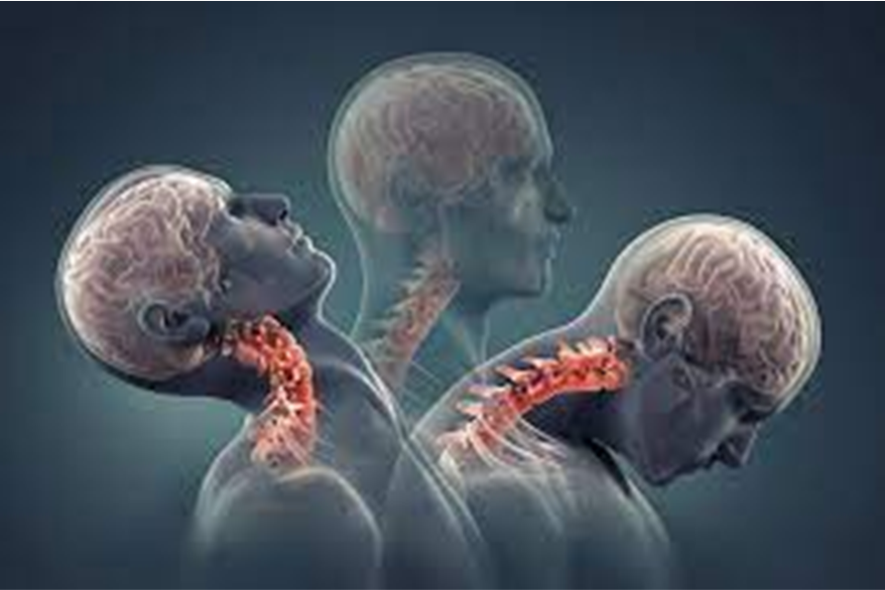
Significance Of Concussion
By definition, the symptoms of concussion seem to resolve spontaneously over the course of time and there appears to be limited structural damage to the brain.
Why then should traumatic brain injury which is ‘mild ‘ be taken seriously?
Firstly, should the condition not be correctly diagnosed and appropriately managed, symptoms are likely to persist for longer and hamper the recovery.
As many of the symptoms listed represent changes to brain function, the developing brain of a young athlete may be significantly compromised not only in a sporting, but importantly also in a learning and social environment.
Post Concussion Syndrome:
- persistent headaches,
- sensitive eyes, poor concentration,
- fatigue and drowsiness,
- disturbed sleep patterns
- mood changes and depression impact on the athlete’s interaction with family and peers.
- Poor coordination,
- delayed reaction times,
- exercise-induced headaches and dizziness, and
- compromised vision will affect performance on the sports field, thereby greatly increasing the risk of recurrent head or other injury.
Scientific Research
- Naeser et al. reported cognitive improvements in 2 chronic mTBI cases after home-based transcranial PBM treatments and in 11 chronic mTBI patients who participated in an open-protocol study of transcranial PBM.
- Morries et al. reported improvements in headache, sleep disturbance, cognition, mood dysregulation, anxiety, and irritability symptoms in 10 patients with chronic TBI after transcranial treatment with a Class IV high-power NIR laser.
- Cognition appeared to improve based on return to work or improved work performance.
- Based on the observations of the patients, their family members, and the treating clinician, quality of life also improved in the cases.
How Does PBM Promote Brain Recovery From TBI?
Research has shown that PBMT:
- produces short-term increases in adenosine triphosphate (ATP), blood, and lymphatic flow;
- upregulates anti-apoptotic proteins, neurotrophins, neurogenesis, and synaptogenesis; and
- reduces oedema, inflammation, and excitotoxicity.
The best-studied mechanism of PBMT centres on its effects in the mitochondria:
- In hypoxic or injured cells, the mitochondria's ability to produce ATP is reduced, likely because nitric oxide (NO), also produced in the mitochondria, can bind to cytochrome C oxidase (CCO), which inhibits respiration and displaces oxygen.
- When photons of light delivered during PBMT are absorbed by CCO, NO is dissociated from CCO and mitochondrial inhibition is reversed.
- Photons of light delivered during PBM can also alter mitochondrial membrane permeability and ion flux, which can result in a brief increase in the production of reactive oxygen species (ROS) that shift the overall cell redox potential in the direction of greater oxidation, decreasing reactive nitrogen species and increasing mitochondrial membrane potential.
- When this occurs, there is an increase in oxygen consumption, glucose metabolism, and ATP production.
- The brief increase in ROS can also change the activity of redox-sensitive transcription factors such as activator protein-1 and NF-κB , which, in turn, can activate signalling pathways and transcription factors that cause changes in protein expression.