
Light reveals who we are, gives us purpose in life
and heals our mind, body and soul.
The Healing Power
Of Light
For thousands of years, philosophers, researchers, and doctors have delved into the healing properties of light. As far back as 4,700 BC, the relationship between mood disorders and seasonal changes in light was observed in ancient China. The ancient Greeks were the first to discover the therapeutic effects of sunlight, which they called heliotherapy. Hippocrates, the father of medicine, showed how sunlight could be used to treat mood disorders. Heliopolis, the Greek city of the sun, was famous for its healing temples, in which sunlight was fragmented into its spectral components (colours), and each component was used for a specific medical problem. Colour, being a manifestation of light, held a therapeutic, as well as divine meaning.
Light therapy became the norm for treating mental health conditions, while phototherapy became a popular modality in dermatological treatments. In the 1970s and 80s, studies demonstrated that altering the circadian rhythm in depressed patients could have a significant antidepressant effect and that light inhibits the secretion of the circadian rhythm-regulating hormone melatonin. This meant that by exposing patients to the appropriate light, their circadian rhythm and sleep patterns could be stabilized, resulting in a natural antidepressant effect.
Photobiomodulation therapy is defined as the utilization of non-ionizing electromagnetic energy to trigger photochemical changes within cellular structures that are receptive to photons.
Mitochondria are particularly receptive to red and near-infrared (NIR) photons. At the cellular level, visible red and near infrared light energy are absorbed by mitochondria, which perform the function of producing cellular energy called “ATP”.
The key to this entire process is a mitochondrial enzyme called cytochrome oxidase c, a chromophore, which accepts photonic energy of specific wavelengths when functioning below par.
There are three bioenergetics pathways in photobiomodulation.
Firstly
Low level visible red to near infrared light (NIR) energy is absorbed by mitochondria and converted into ATP for cellular use.
Secondly
The process creates mild oxidants (ROS), which leads to gene transcription and then to cellular repair and healing.
Lastly
The process also unclogs the chain that has been clogged by nitric oxide (NO). The nitric oxide is then released back into the system. Nitric oxide is a molecule that our body produces to help its 50 trillion cells communicate with each other. This communication happens by transmission of signals throughout the entire body.
Additionally, nitric oxide helps to dilate the blood vessels and improve blood circulation.
Collectively, brain photobiomodulation heals damaged brain cells, improves cerebral blood circulation, reduces inflammation and toxicity, and regenerates damaged brain cells. In a nutshell, NIR light energy delivered to the brain improves efficiency and performance due to better signalling and repaired connectivity between the neurons. Thus, its effectiveness in the use of patients with dementia, concussion and brain injuries.
The treatment parameters and number of sessions needed for PBMT are dependent upon location and cause. PBMT usually requires more than one treatment for optimal pain relief. It may take several treatments for the results to become evident. Spine-Health.com reports that it can take anywhere from eight to 30 sessions for a treatment to be fully effective, and some patients find it necessary to undergo treatment two to four times per week. The total number of treatments needed depends on the condition being treated, the severity of the condition, and each patient’s individual response. The suggested protocol for our Vielight devices is 20 minutes 3-5 times per week – after 8 weeks on this protocol research and patient feedback shows improvement across all conditions. See the research articles and info for individual protocols and results.
Targeting Inflamation
For inflammation, PBMT causes the smaller arteries and lymph vessels of the body to increase in size, which is called vasodilation. Vasodilation allows inflammation, swelling, and oedema to be cleared away from injury sites more effectively. Vasodilation in lymph nodes promotes lymphatic drainage, which also aids in the healing process. Basic research has demonstrated that PBMT can decrease the pro-inflammatory cellular response factors and increase the anti-inflammatory response. Thus, using the device, along with an anti-inflammatory diet and lifestyle, can help reduce inflammation anywhere in the body – even sites removed from the placement of the device.
Sports Injuries
PBMT has been adopted as an essential management tool by athletic trainers in most major league sports franchises across the world, as well as by many Olympic teams. Research shows that elite athletes make faster comebacks after being injured when PBMT is part of the treatment plan. Major league pitchers, use PBMT as part of a normal warm-up routine, and many athletes use them as part of rehabilitation. PBMT is also used to treat the weekend athlete with common sports injuries such as plantar fasciitis, hamstring pulls, and various muscular sprains. More excitingly, athletes using PBMT as part of their training programs are experiencing 5-10% improvement in their performance, less injuries, faster recovery, greater endurance and less fatigue.
PBMT promotes improvement of maximum voluntary contraction, better oxygen consumption, increased time to achieve exhaustion and fatigue, and decreased creatine kinase (CK), oxidative stress, and fatigue markers, mainly when used before exercise.
In addition, PBMT applied before exercise, regardless of variations in doses and wavelengths, improves muscle performance and decreases levels of inflammation and fatigue markers. Furthermore, the number of repetitions performed can be increased, the time to fatigue onset can be lengthened and the peak torque can be improved. Enhancement gains can be seen in different areas of physical training abilities such as strength and cardiovascular training.
Brain Health
PBMT has been proven by several institutions in being effective in treating and improving mental health, in each area- Depression, PTSD, anxiety, sleep, pain. Furthermore, PBMT is effective in improving cognitive health and performance wrt processing speed, executive function, attention, impulsivity control and memory. This is seen in the research in patients suffering from mild memory issues and brain fog – through to patients with dementia – where improvements were seen not only clinically but on mri scans before, and 8 week after treatment with PBMT.
In addition, PBMT improves motor performance wrt balance, reaction time, performance reaction time (Processing + attention + impulsivity control+ reaction time), strength (central factors), and overall strength – hence its effective use in patients with Parkinson’s.

Vagus Nerve Stimulation (VNS)

Mitochondria

Nitric Oxide

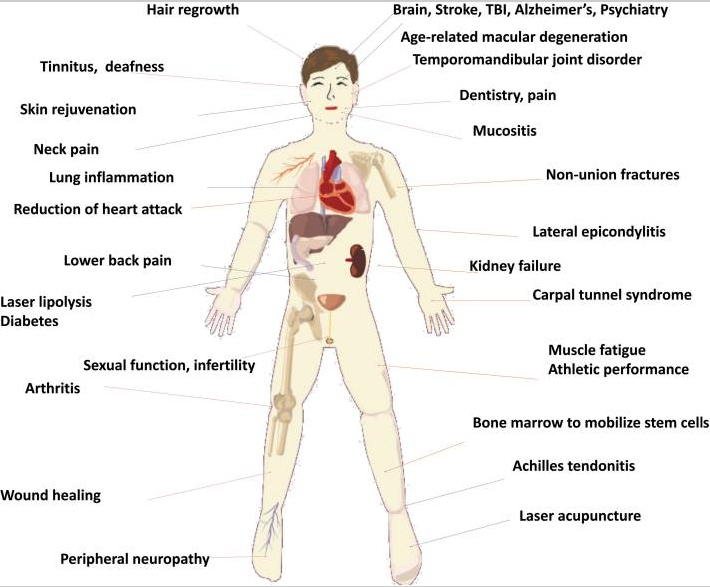
Other Benefits
Of Photobiomodulation
What is Photobiomodulation?
Photobiomodulation therapy is defined as the utilization of non-ionizing electromagnetic energy to trigger photochemical changes within cellular structures that are receptive to photons.
Mitochondria is particularly receptive to red and near-infrared (NIR) photons. At the cellular level, visible red and near infrared light energy are absorbed by mitochondria, which perform the function of producing cellular energy called “ATP”.
The key to this entire process is a mitochondrial enzyme called cytochrome oxidase c, a chromophore, which accepts photonic energy of specific wavelengths when functioning below par.
Read a published study (May 2022) using the Vielight Neuro Alpha on the way that living cells, cellular structures, and components such as microtubules and tubulin respond to near-infrared PBM: Link

The effects of red to NIR light energy on mitochondria
Ref: Original: “Basic Photomedicine”, Ying-Ying Huang, Pawel Mroz and Michael R. Hamblin, Harvard Medical School. Current design: Vielight Inc.
What are the Mechanisms of Photobiomodulation?
There are three bioenergetics pathways in photobiomodulation.
Firstly, low level visible red to near infrared light (NIR) energy is absorbed by mitochondria and converted into ATP for cellular use.
Secondly, the process creates mild oxidants (ROS), which leads to gene transcription and then to cellular repair and healing.
Lastly, the process also unclogs the chain that has been clogged by nitric oxide (NO).[1] The nitric oxide is then released back into the system. Nitric oxide is a molecule that our body produces to help its 50 trillion cells communicate with each other. This communication happens by transmission of signals throughout the entire body. Additionally, nitric oxide helps to dilate the blood vessels and improve blood circulation.
What are the Pathways of Photobiomodulation?
- ATP (Adenosine Triphosphate) → cAMP (catabolite activator protein) → Jun/Fos (oncogenic transcription factors) → AP-1 (activator protein transcription factor stimulates gene transcription)
- ROS (Reactive Oxygen Series) → PKD (gene) → IkB (Inhibitor κB) + NF-κB (nuclear factor κB) → NF-κB (nuclear factor κB stimulates gene transcription)
- NO (Nitric Oxide)

The effects of red to NIR light energy on mitochondria
Ref: Original: “Basic Photomedicine”, Ying-Ying Huang, Pawel Mroz and Michael R. Hamblin, Harvard Medical School. Current design: Vielight Inc.
What is Photobiology?
Photobiology is the study of the effects of non-ionizing radiation on biological systems. The biological effect varies with the wavelength region of the radiation. The radiation is absorbed by molecules in skin such as DNA, protein or certain drugs. The molecules are changed chemically into products that initiate biochemical responses in the cells.
Biological reaction to light is nothing new, there are numerous examples of light induced photochemical reactions in biological systems. Vitamin D synthesis in our skin is an example of a photochemical reaction. The power density of sunlight is only 105 mW/cm2 yet when ultraviolet B (UVB) rays strikes our skin, it converts a universally present form of cholesterol, 7-dehydrocholesterol to vitamin D3. We normally experience this through our eyes which are obviously photosensitive. Our vision is based upon light hitting our retinas and creating a chemical reaction that allows us to see. Throughout the course of evolution, photons have played a vital role in photo-chemically energizing certain cells.

Photon absorption by cytochrome c oxidase (CCO)
Ref: Original: “Basic Photomedicine”, Ying-Ying Huang, Pawel Mroz and Michael R. Hamblin, Harvard Medical School. Current design: Vielight Inc.
PBM Parameters
The correct wavelength for the target cells or chromophores must be employed (633-810 nm). However, if the wavelength is incorrect, optimum absorption will not occur. Thus, as the first law of photobiology, the Grotthus-Draper law, states — without absorption there can be no reaction.
The photon intensity, i.e., spectral irradiance or power density (W/cm2), must be adequate, or absorption of the photons will not be sufficient to attain the desired result. However, if the intensity is too high, the photon energy will be transformed to excessive heat in the target tissue, and that is undesirable.
Finally, the dose or fluence must also be adequate (J/cm2). Consequently, if the power density is too low, then prolonging the irradiation time to achieve the ideal energy density, or dose, will, most likely, not give an adequate final result. This happens because the Bunsen-Roscoe law of reciprocity, the 2nd law of photobiology, does not hold true for low incident power densities.
Brain Bioenergetics
Near-infrared light (NIR) stimulates mitochondrial respiration in neurons by donating photons that are absorbed by cytochrome oxidase. This is a bioenergetics process called photoneuromodulation in nervous tissue. The absorption of luminous energy by the enzyme results in increased brain cytochrome oxidase enzymatic activity and oxygen consumption. Since the enzymatic reaction catalyzed by cytochrome oxidase is the reduction of oxygen to water, acceleration of cytochrome oxidase catalytic activity directly causes an increase in cellular oxygen consumption. Increased oxygen consumption by nerve cells is coupled to oxidative phosphorylation. Hence, ATP production increases as a consequence of the metabolic action of near-infrared light. This type of luminous energy can enter brain mitochondria transcranially, and — independently of the electrons derived from food substrates — it can directly photostimulate cytochrome oxidase activity.
 What is brain photobiomodulation?
The brain is the most important and complex human organ. Within every brain cell are mitochondria, which are best understood as energy-producing “powerhouses” or “batteries”. Through biochemical reactions, the mitochondria create fuel for brain cells.
Your brain’s mitochondrial performance can be improved by absorbing light energy (photons) of specific wavelengths. This process is called photobiomodulation (PBM). Scientific research shows our brain’s mitochondria respond positively to light energy within the NIR wavelength range.
When NIR energy from, for example, a Vielight Neuro, is delivered to neuronal mitochondria, it is absorbed by a light-sensitive enzyme called cytochrome c oxidase. This enzyme uses NIR energy to start a series of biochemical reactions that are both beneficial and energizing to the neurons and other brain cells.

NIR Light Penetration through Human Skull – Vielight Neuro
Collectively, brain photobiomodulation heals damaged brain cells, improves cerebral blood circulation, reduces inflammation and toxicity, and regenerates damaged brain cells. In a nutshell, NIR light energy delivered to the brain improves efficiency and performance due to better signaling and repaired connectivity between the neurons.
The NIR spectrum of light energy provides the deepest penetration into brain tissues that also result in benefits. We chose the NIR wavelength of 810 nm based on the NIR window. To determine the optimal parameters for PBM, research that uses Vielight technology often employ brain imaging and brain signaling techniques.
Penetration of Light Energy
What is NIR light energy?
Near infrared light (NIR) energy is part of the electromagnetic spectrum – which are waves (or photons) of the electromagnetic field.It radiates through space and carries electromagnetic radiant energy. Several existing technologies depend on the ability of electromagnetic energy to penetrate solid objects, such as WiFi, mobile data, radar and navigation satellites.

Figure 1 The electromagnetic spectrum
The depth or the power of penetration by light energy depends on the wavelength in the electromagnetic spectrum. Thus, the longer the wavelength, the greater the ability for photons to penetrate an object. NIR light energy is found around the center of the electromagnetic spectrum.
Why near infrared light energy for brain photobiomodulation?
The near infrared (NIR) window is the range in the electromagnetic spectrum where light has a maximum depth of penetration in tissue.[1] This is because the NIR window is defined by the absorption of photons by blood at the shorter wavelengths and by water at the longer wavelengths. NIR light energy also derives the greatest mitochondrial response out of the entire electromagnetic spectrum.

Figure 2 The near infrared window or body’s optical window. Image source: Wang, Erica & Kaur, Ramanjot & Fierro, Manuel & Austin, Evan & Jones, Linda & Jagdeo, Jared. (2019). Safety and penetration of light into the brain. 10.1016/B978-0-12-815305-5.00005-1.
In particular, visible light (wavelength 400 to 700 nm) is substantially absorbed by hemoglobin and other organic matter. On the other hand, absorption by water increases at wavelengths longer than near infrared light (1000+nm). This implies that wavelengths outside of the near-infrared window cannot penetrate deeply through tissue.
Example: “Fire!” When you hold your hand out to a burning fire you feel heat being emitted by the fire. What is happening? The fire emits infrared radiation, which the water molecules absorb in your skin. Then, this is perceived as heat because the nerves in your skin detect the raised temperature.
Penetration through the skull using NIR LED technology
Several independent published studies support the ability of NIR LED technology to penetrate the skull and irradiate the brain.[2], [3], [4] Lasers are not necessary and harbor inherent unnecessary dangers, due to the nature of coherent light energy – power throttling and overheating tend to occur. The common factor is the wavelength range of 800-830nm, which falls within the body’s optical window.
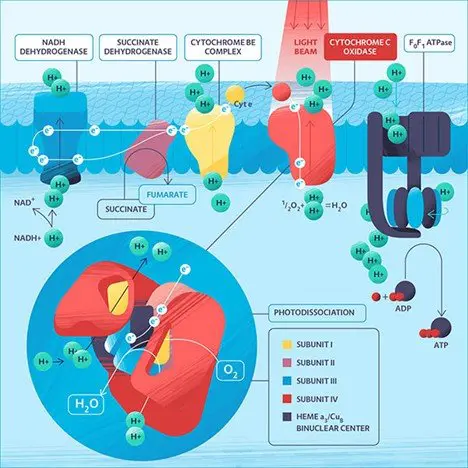
Brain photobiomodulation (PBM) utilizes red to near-infrared (NIR) photons to stimulate the cytochrome c oxidase enzyme (chromophore/complex IV) of the mitochondrial respiratory chain because this enzyme is receptive to light energy. This outcomes are an increase in ATP synthesis, leading to the generation of more cellular energy. Additionally, photon absorption by ion channels results in release of Ca2+ which leads to the activation of transcription factors and gene expression.
There are several mechanisms associated with promoting physiological change through photobiomodulation therapy (PBMT). The wavelengths primarily used with PBM is within the near-infrared range of the electromagnetic spectrum with a sufficient power density. When hypoxic/impaired cells are irradiated with low level NIR photons, there is increased mitochondrial adenosine tri-phosphate (ATP) production within their mitochondria.[1], [2] Another change is the release of nitric oxide from the hypoxic/impaired cells. Neurons are cells that contain mitochondria and nitric oxide.
In hypoxic neuronal cells, cytochrome-C oxidase (CCO), a membrane-bound protein that serves as the end-point electron acceptor in the cell respiration electron transport chain, becomes inhibited by non-covalent binding of nitric oxide. When exposed to NIR photons, the CCO releases nitric oxide, which then diffuses outs of the cell – increasing local blood flow and vasodilation.
Following initial exposure to the NIR photons, there is a brief burst of reactive oxygen species (ROS) in the neuron cell, and this activates a number of signaling pathways. The ROS leads to activation of redox-sensitive genes, and related transcription factors including NF-κβ. The PBMT stimulates gene expression for cellular proliferation, migration, and the production of anti-inflammatory cytokines and growth factors.
Michael R Hamblin 1, Scott T Nelson 2, Justin R Strahan 2
PMID: 29466089 PMCID: PMC5946726 DOI: 10.1089/pho.2017.4401
Abstract
Background: Photobiomodulation (PBM) therapy is a rapidly growing approach to stimulate healing, reduce pain, increase athletic performance, and improve general wellness.
Objective: Applying PBM therapy over the site of a tumor has been considered to be a contraindication. However, since another growing use of PBM therapy is to mitigate the side effects of cancer therapy, this short review seeks to critically examine the evidence of whether PBM therapy is beneficial or harmful in cancer patients.
Materials and methods: PubMed and Google Scholar were searched.
Results: Although there are a few articles suggesting that PBM therapy can be detrimental in animal models of tumors, there are also many articles that suggest the opposite and that light can directly damage the tumor, can potentiate other cancer therapies, and can stimulate the host immune system. Moreover, there are two clinical trials showing increased survival in cancer patients who received PBM therapy.
Conclusions: PBM therapy may have benefits in cancer patients and should be further investigated.
Keywords: antitumor immune response; cancer; cancer therapy side effects; contraindication; low-level laser therapy; photobiomodulation.
Katayoun A M Kalhori 1, Farshid Vahdatinia 2, Mohammad Reza Jamalpour 3, Paolo Vescovi 4, Carlo Fornaini 5 6, Elisabetta Merigo 6, Reza Fekrazad 7 8
PMID: 31873066 DOI: 10.1089/photob.2019.4706
Abstract
Objective: To provide a review of the literature about the photobiomodulation therapy (PBMT) dental treatment protocols in oral medicine based on validated clinical studies that have been published so far. Background data: The lack of effective therapies for the treatment of various types of oral diseases or the presence of invasive therapeutic methods along with the use of a wide range of medications has had a significant impact on the quality of life of these patients. PBMT as a noninvasive and nondrug method can play an influential role in the treatment of oral diseases.
Methods: In this study, published clinical studies up to April 2019 were reviewed from library sources, Google Scholar, PubMed and Medline, Elsevier, Embase, Cochrane, Scopus, and Web of science (ISI).
Results: In general, the findings of this study showed that PBMT has had a positive effect on the treatment of oral lichen planus, recurrent aphthous stomatitis, hyposalivation, pemphigus vulgaris, recurrent herpes simplex, burning mouth syndrome, bisphosphonate-related osteonecrosis of the jaw, trigeminal neuralgia, facial nerve paralysis, geographic tongue, and chronic sinusitis. Conclusions: PBMT can be effective (as an alternative treatment or in combination with other therapies) in improving symptoms or in the complete treatment of oral diseases. However, further clinical studies are still necessary to achieve more robust results.
Keywords: low-level laser therapy; oral medicine; photobiomodulation.
Erin M Dodd 1, Margo A Winter 1, Maria K Hordinsky 1, Neil S Sadick 2, Ronda S Farah 1
PMID: 29020478 DOI: 10.1080/14764172.2017.1383613
Abstract
The market for home-use photobiomodulation devices to treat androgenetic alopecia has rapidly expanded, and the Food and Drug Administration (FDA) has recently cleared many devices for this purpose. Patients increasingly seek the advice of dermatologists regarding the safety and efficacy of these hair loss treatments. The purpose of this guide was threefold: (1) to identify all home-use photobiomodulation therapy devices with FDA-clearance for treatment of androgenetic alopecia; (2) to review device design, features and existing clinical evidence; and (3) to discuss practical considerations of photobiomodulation therapy, including patient suitability, treatment goals, safety, and device selection. A search of the FDA 510(k) Premarket Notification database was conducted using product code "OAP" to identify all home-use devices that are FDA-cleared to treat androgenetic alopecia. Thirteen commercially available devices were identified and compared. Devices varied in shape, wavelength, light sources, technical features, price, and level of clinical evidence. To date, there are no head-to-head studies comparing the efficacy of these devices. Photobiomodulation therapy devices have an excellent safety profile and mounting evidence supporting their efficacy. However, long-term, high quality studies comparing these devices in diverse populations are lacking. As these devices become increasingly popular, dermatologists should be familiar with this treatment modality to add to their therapeutic armamentarium.
Abbreviations: AGA, androgenetic alopecia; FDA, Food and Drug Administration; IEC, International Electrotechnical Commission; LED, light-emitting diode; PBMT, photobiomodulation therapy.
Keywords: Photobiomodulation therapy; alopecia; lasers and light sources; low-level light therapy.
Damien P Kuffler
PMID: 26681143 DOI: 10.2217/rme.15.82
Abstract
Despite diverse methods being applied to induce wound healing, many wounds remain recalcitrant to all treatments. Photobiomodulation involves inducing wound healing by illuminating wounds with light emitting diodes or lasers. While used on different animal models, in vitro, and clinically, wound healing is induced by many different wavelengths and powers with no optimal set of parameters yet being identified. While data suggest that simultaneous multiple wavelength illumination is more efficacious than single wavelengths, the optimal single and multiple wavelengths must be better defined to induce more reliable and extensive healing of different wound types. This review focuses on studies in which specific wavelengths induce wound healing and on their mechanisms of action.
Keywords: HBOT; LED; LLLT; diabetic ulcer; infrared laser; laser light; wound healing.
The literature on brain photobiomodulation is growing rapidly. Currently, there are over 220 published studies on brain photobiomodulation.
Brain photobiomodulation has been shown to increase cerebral perfusion and increase connectivity within the Default Mode Network of patients with Alzheimer’s disease and dementia.[1],[2]
In patients with Parkinson’s disease, measures of mobility, cognition, dynamic balance and fine motor skill y improved (p < 0.05) with PBM treatment for 12 weeks and up to one year.[3]
There is scientific literature that suggests photobiomodulation might be useful for depression/anxiety.[4]
Photobiomodulation has also been shown to induce positive physiological changes for traumatic brain injury.[5]
EEG neural activity can also be influenced by pulsed NIR energy.[6],[7]
We can expect many more research outcomes of PBM featuring the use of Vielight technology in the near future.
References
- Chao LL. Effects of Home Photobiomodulation Treatments on Cognitive and Behavioral Function, Cerebral Perfusion, and Resting-State Functional Connectivity in Patients with Dementia: A Pilot Trial. Photobiomodul Photomed Laser Surg. 2019 Mar;37(3):133-141. doi: 10.1089/photob.2018.4555. Epub 2019 Feb 13. PMID: 31050950.
- Saltmarche AE, Naeser MA, Ho KF, Hamblin MR, Lim L. Significant Improvement in Cognition in Mild to Moderately Severe Dementia Cases Treated with Transcranial Plus Intranasal Photobiomodulation: Case Series Report. Photomed Laser Surg. 2017 Aug;35(8):432-441. doi: 10.1089/pho.2016.4227. Epub 2017 Feb 10. PMID: 28186867; PMCID: PMC5568598.
- Liebert A, Bicknell B, Laakso EL, Heller G, Jalilitabaei P, Tilley S, Mitrofanis J, Kiat H. Improvements in clinical signs of Parkinson’s disease using photobiomodulation: a prospective proof-of-concept study. BMC Neurol. 2021 Jul 2;21(1):256. doi: 10.1186/s12883-021-02248-y. PMID: 34215216; PMCID: PMC8249215.
- Cassano P, Petrie SR, Mischoulon D, Cusin C, Katnani H, Yeung A, De Taboada L, Archibald A, Bui E, Baer L, Chang T, Chen J, Pedrelli P, Fisher L, Farabaugh A, Hamblin MR, Alpert JE, Fava M, Iosifescu DV. Transcranial Photobiomodulation for the Treatment of Major Depressive Disorder. The ELATED-2 Pilot Trial. Photomed Laser Surg. 2018 Dec;36(12):634-646. doi: 10.1089/pho.2018.4490. Epub 2018 Oct 20. PMID: 30346890; PMCID: PMC7864111.
- Chao LL, Barlow C, Karimpoor M and Lim L (2020) Changes in Brain Function and Structure After Self-Administered Home Photobiomodulation Treatment in a Concussion Case. Front. Neurol. 11:952. doi: 10.3389/fneur.2020.00952
- Hala El Khoury, John Mitrofanis, Luke A Henderson, Exploring the Effects of Near Infrared Light on Resting and Evoked Brain Activity in Humans Using Magnetic Resonance Imaging,Neuroscience,Volume 422,2019, ISSN 0306-4522, https://doi.org/10.1016/j.neuroscience.2019.10.037.